New Fed, New Rules of the Game? What Kevin Warsh Could Mean for Interest Rates, the Dollar, and Bonds
02.07.2026
New Fed, New Rules of the Game? What Kevin Warsh Could Mean for Interest Rates, the Dollar, and Bonds


Author - Andreas Weidinger
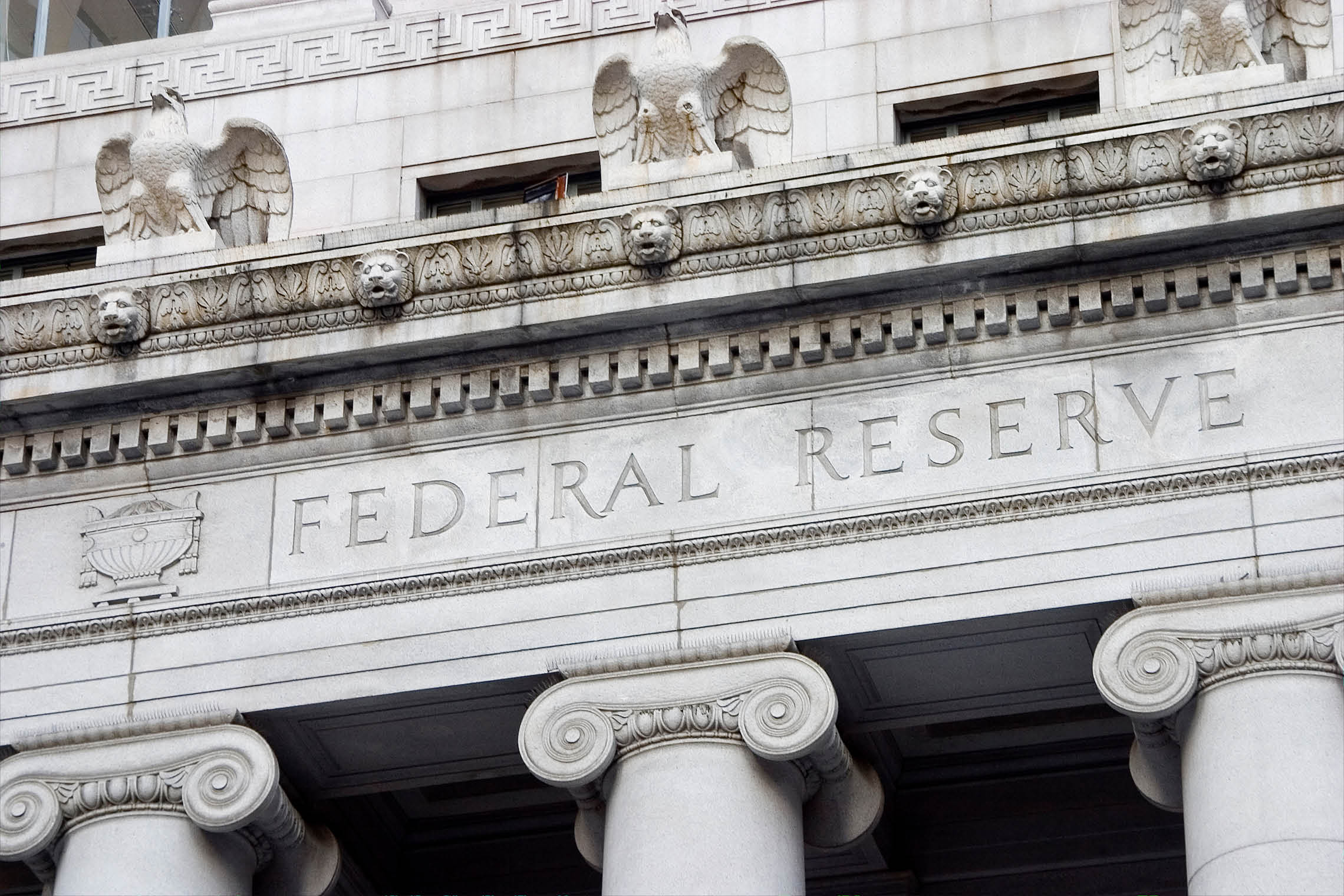
With the appointment of Kevin Warsh as head of the U.S. Federal Reserve in May 2026, the Federal Reserve’s (Fed) monetary policy could change significantly. Warsh was nominated by President Donald Trump in January 2026. Since his reelection, Trump himself had been pressing the Federal Reserve to cut key interest rates and was engaged in an open dispute with his predecessor, Jerome Powell, over this policy. Until the end of February, markets held out hope that key interest rates would be cut further by the end of the year under a new Fed chair.
However, the conflict in the Persian Gulf, the resulting rise in oil prices, and the resurgence of inflation dashed those hopes. Interest rate cuts receded into the distant future, and the mantra “higher for longer” once again took hold. What can be expected from the “new Fed”?
Warsh, who did not want to be portrayed as Donald Trump’s puppet, broke with some previous practices during his press conference following the June 17 meeting. As expected, key interest rates remained unchanged. However, he announced that he would reject the so-called dot plots. These are anonymous dot plots from which the Fed members’ interest rate expectations for the future can be inferred and which are frequently used by the market as a guide. Forward guidance—that is, a forecast of future interest rate policy—was also not communicated. Warsh noted, however, that the opinions of voting members could change rapidly.
Reduced Balance Sheet
In addition, Warsh announced the formation of five working groups within the Fed that are tasked with developing proposals on various topics by the end of the year. These topics include the Fed’s communication, the Fed’s balance sheet (with a focus on the pros and cons of the current system of ample reserves), data usage and reliability, productivity and employment, and the assessment of inflation. Warsh himself did not emphasize any of these topics in particular. However, it is well known from the past that he was not an advocate of a permanent expansion of the Fed’s balance sheet to cushion crises, but rather seeks to reduce it. Some time ago, he warned about the effects of quantitative easing (QE)—that is, the central bank’s purchase of bonds to supply the economy with cheap liquidity—and the associated expansion of the Fed’s balance sheet. This could be interpreted as a signal for higher interest rates in the bond markets. During the press conference, the impression also emerged that, given the strong economy and stable labor market, price stability is the Federal Reserve’s top priority. Warsh emphasized that the Federal Open Market Committee is committed to price stability and will deliver it, as higher prices place a burden on the public.
The markets interpreted these statements as very hawkish. As a result, expectations for key interest rate hikes rose significantly. While no rate hike had been priced in on the day before the Fed meeting on June 17, expectations the following day ranged between one and two hikes. Yields on Treasury bonds with remaining maturities of six months to three years rose by ten basis points or more. Yields on 10-year bonds remained virtually unchanged from June 16 to 18, while yields on 20-year and longer-term bonds fell slightly (Source: Bloomberg, June 25, 2026). This suggests that the Fed’s credibility was not undermined by Warsh’s appointment and that the central bank’s independence remains intact.
Our Investment Strategy
Expectations of higher key interest rates in the U.S. dollar, as well as a potential widening of the interest rate differential between the USD and the EUR, led to an appreciation of the U.S. dollar against the euro. While the USD/EUR exchange rate was still at 1.16 prior to the Fed’s interest rate decision, the U.S. dollar has since appreciated to below 1.14 and is currently trading at 1.14 (Source: Bloomberg, June 25, 2026). Accordingly, the USD hedge in the Kathrein investment strategy has been reduced. In addition, we remain underweight in the two- and five-year maturity segments of U.S. Treasury bonds.
Disclaimer
This is a marketing communication from Kathrein Privatbank Aktiengesellschaft within the meaning of the Securities Supervision Act of 2018 and is provided for informational purposes only. This information is intended to provide a general overview of current market data and Kathrein’s market opinion and does not constitute a direct or indirect recommendation for a specific investment strategy in the sense of financial analysis. When investing in securities, price fluctuations due to market changes are possible at any time. Information and representations relating to the past do not allow for reliable conclusions regarding future results. Despite careful research and data collection, no liability or guarantee can be assumed for the accuracy of the data.