Mega-IPOs in Focus – SpaceX and the Dynamics of Large Public Offerings
16.06.2026
Mega-IPOs in Focus – SpaceX and the Dynamics of Large Public Offerings


Author - Josef Stadler, Harald Besser
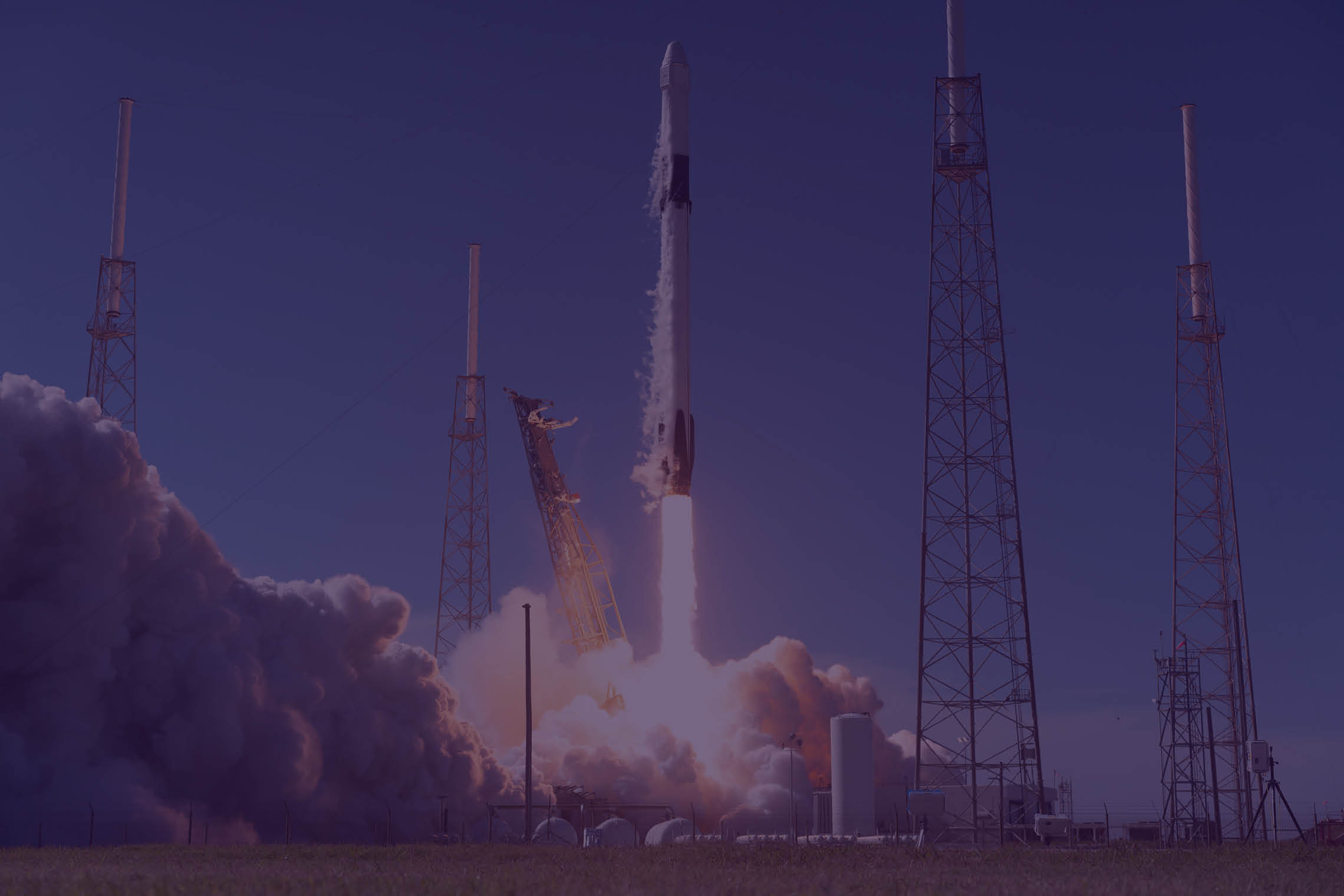
The initial public offering (IPO) of SpaceX took place only a few days ago, yet it already appears to be more than just an isolated capital market event. With an issuance volume of USD 75 to 80 billion and a valuation between USD 1.75 and 1.8 trillion, SpaceX represents the largest IPO in history (Source: Bloomberg Finance L.P., 12 June 2026). Few companies currently symbolize the combination of technological progress, geopolitical relevance, and stock market expectations as strongly.
Space exploration, satellite infrastructure, defense, data transmission, and artificial intelligence – Elon Musk has succeeded in consolidating many highly topical themes into a single narrative. The timing of this step is no coincidence: after years in which rising interest rates and declining growth valuations had slowed the IPO market, the environment has noticeably improved. Equity markets are trading at high levels, and the AI boom has increased risk appetite. The next candidates, such as Anthropic and OpenAI, are also preparing for IPOs to benefit from this sentiment.
For companies, an IPO primarily serves as a financing instrument. They typically go public when capital is available, risk appetite is high, and their valuation appears attractive. Historically, IPO phases often coincide with elevated market valuations. However, for investors, this means that a significant portion of future growth expectations may already be priced in. IPOs follow their own market logic: they are not automatically attractive just because a company is well-known, innovative, or strategically important. The strongest price gains often occur very early, frequently within the first weeks after listing. This is often followed by a normalization phase, in which reporting obligations, quarterly results, valuation comparisons, and lock-up periods become more significant.
Mega-IPOs and the Question of What Happens Afterwards
The example of Saudi Aramco (until recently the largest IPO in history) shows that sheer size and market share are not reliable indicators of a successful investment. The oil giant raised approximately USD 25 billion at a valuation of USD 1.7 trillion at the end of 2019. Three months later, the share price was more than 30 percent below the IPO price, and currently, the stock still trades about 15 percent below the issue price (Source: Bloomberg Finance L.P., 12 June 2026).
The IPOX-100 US Index covers about 85 percent of the total market capitalization in the US IPO market and includes the 100 largest and most liquid companies that have recently gone public. Certain diversification rules apply, such as limiting the share of the largest index components to 10 percent. The index thus reflects the performance of newly listed companies (IPOs) in the US and serves as a benchmark for the overall development of the US IPO market. Since 2010, the index has shown an annualized realized volatility of 22 percent, significantly higher than the S&P 500. During risk-on market phases, the index consistently outperforms the S&P 500, while it underperforms markedly in risk-off phases. Interest rate sensitivity is asymmetrical and pronounced: the decline in 2022 amounted to –34.1 percent, almost twice the drop of the S&P 500 (–18.6 percent) (Source: Bloomberg Finance L.P., 2026).
From 2025 onwards, the IPOX-100 has again achieved significant outperformance, catalyzed by AI-driven issuances and the mega-IPO of SpaceX (Source: Bloomberg Finance L.P., 12 June 2026). Dispersion within the index is high. Even in strong years, a significant portion of individual IPOs trade below their issue price, so the index-level return masks large differences between individual stocks. This underlines the importance of careful single-stock selection when investing in IPOs.
What Is the Price?
For private investors, the central question is therefore not whether SpaceX or other mega-IPOs are fascinating companies. Rather, it is at what price this fascination is purchased. Mega-IPOs may trigger strong short-term price movements and offer access to structural growth themes. At the same time, they carry typical risks: high initial valuations, strong volatility, limited trading history, and often not yet fully proven profitability. Discipline is more important than enthusiasm, especially when a company is already being traded as a future stock market legend shortly after its IPO.
Disclaimer
This document is a marketing communication by Kathrein Privatbank Aktiengesellschaft within the meaning of the Austrian Securities Supervision Act 2018 and is for informational purposes only. This information aims to provide a general overview of current market data and the Kathrein market opinion and does not contain a direct or indirect recommendation for a specific investment strategy within the meaning of a financial analysis. Investments in securities are subject to price fluctuations due to market changes at any time. Past data and presentations do not allow reliable conclusions about future results. Despite careful research and recording, no liability or guarantee can be assumed for the accuracy of the data.